Combustible Dust in B.C.: The New Part 6 Rules That Apply From January 4, 2027
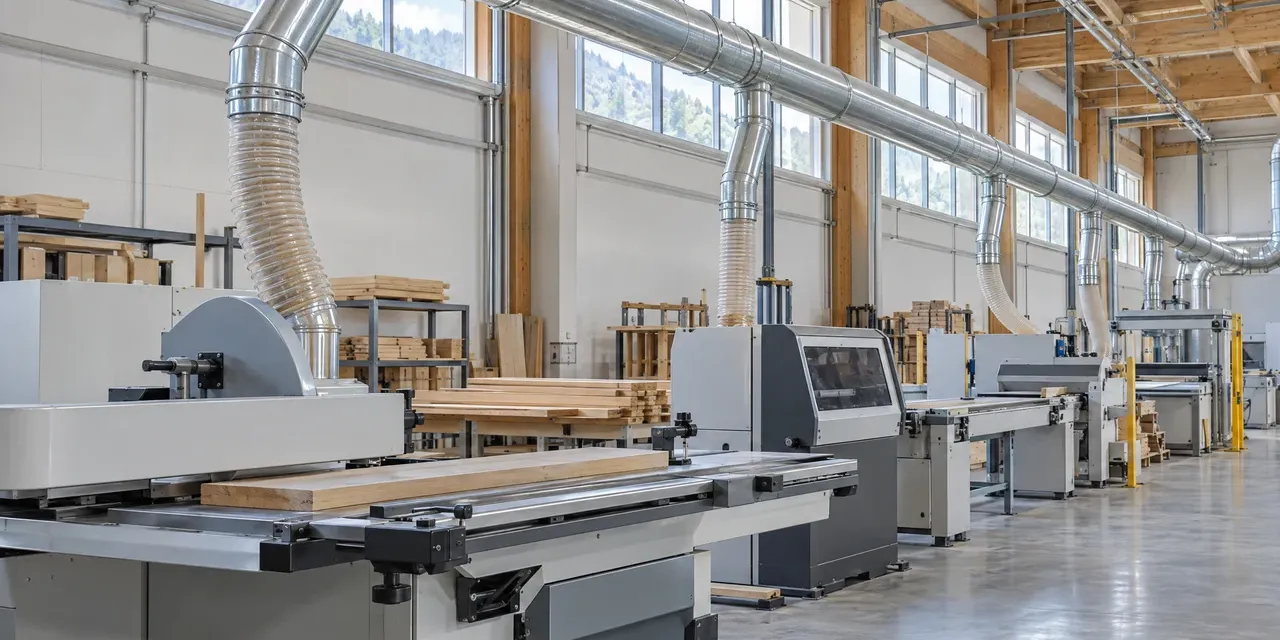
British Columbia's Occupational Health and Safety Regulation adds rules on combustible dust on January 4, 2027, when B.C. Reg. 229/2025 inserts sections 6.133 to 6.159 into Part 6. 1 Until that date, combustible dust management programs apply only to wood dust. The amendments extend them to all types of combustible dust, including dust from metals, plastics and flours. 6 An employer who generates or handles dust from a work process must find out whether it is combustible and, if it is, assess the combustion risk in writing. If the assessment identifies a combustion hazard, the employer also needs a written management program, controls and worker training. 1
What is B.C. Reg. 229/2025?
B.C. Reg. 229/2025 amends the Occupational Health and Safety Regulation, B.C. Reg. 296/97, effective January 4, 2027. On October 26, 2026, BC Laws still listed it under "Amendments not in force." 1 WorkSafeBC's Board of Directors approved the amendments on November 14, 2025, by resolution 2025/11/14-07. 2 WorkSafeBC's explanatory notes say the Regulation lacked dedicated provisions on combustible dust, and describe the amendments as a framework "applicable to all types of combustible dust present at workplaces." 3
Which dust and which employers are covered?
Under the new section 6.133, combustible dust is "a dust that is ignitable or deflagrable." A deflagration is "a flame that spreads rapidly outwards from the point of ignition through dust suspended in air." 1 The notes say "dust" keeps its ordinary dictionary meaning, rather than a definition tied to properties such as particle size or minimum ignition energy. 3
WorkSafeBC names bakeries, metal foundries and sawmill operations among the sectors that typically generate combustible dust. Its examples by industry are: 5
- Agriculture: fertilizers, grain.
- Food and beverage processing: grain, sugar, flour.
- Machining and manufacturing: wood, fabric, metal, plastic, rubber.
- Coal mining and processing: coal.
- Chemical products manufacturing: pharmaceuticals.
The new sections apply to dust at a workplace that is "an input, product, byproduct or waste of a work process." 1 WorkSafeBC's explanatory notes say they do not target the day-to-day household or office dust that might accumulate at a workplace. 3 Two cases are excluded: 1
- a workplace where there is "no reasonably foreseeable risk of injury or death to a worker from the combustion of dust";
- "dust that is in a sealed commercial package."
The notes say the first exclusion is meant for employers "only in the lowest range of risk," who must still meet other duties, such as sections 3.5, 3.9, 4.3 and 4.41 of the Regulation. 3
The duties fall on any employer who generates or handles dust, and handling includes using, storing and transporting it. 1 The notes say this covers loading and unloading combustible dust for transport. 3 Section 6.135 then sets the order of the work. The employer must minimize the combustion risks, if any, and: 1
- identify whether the dust is combustible (section 6.137);
- if it is, prepare and update a combustion risk assessment (section 6.140);
- if the assessment identifies a combustion hazard, prepare, implement and update a combustible dust management program (section 6.141) and provide instruction and training (section 6.143).
How does an employer show that a dust is not combustible?
Under section 6.137, the employer must assume that the dust is ignitable and deflagrable unless it determines otherwise under section 6.138 or 6.139. 1 Each determination is in writing and made in consultation with a qualified person. It is based on testing a representative sample, or on objective data from such a test published by a provincial, national or international body or standards association. 1 The regulation names these screening tests and also accepts similar tests published by a national or international body or standards association: 1
- Ignitability: the Preliminary screening test in the UN Recommendations on the Transport of Dangerous Goods, Manual of Tests and Criteria, Seventh edition, Part III, Section 33.2.4.3.1.
- Deflagrability: ASTM E1515-14, Standard Test Method for Minimum Explosible Concentration of Combustible Dusts, or the Go/No Go screening test methodology in ASTM E1226-19, Standard Test Method for Explosibility of Dust Clouds.
WorkSafeBC's explanatory notes say the Part 1 definition of "qualified" applies, and different people may act as the qualified person for different requirements. The notes add that some dusts deflagrate when suspended in air but will not ignite in a pile or layer, so a dust must be shown to be both not ignitable and not deflagrable. An employer may also keep the assumption and go straight to the risk assessment. 3
What must the combustion risk assessment include?
The regulation defines a combustion hazard as "a factor that could give rise to a combustion that could cause injury or death to a person." The combustion risk is the likelihood that such a hazard gives rise to such a combustion. 1
For each combustion hazard, the assessment sets out the level of combustion risk and any work processes or other factors that could increase it. It must be in writing, prepared and updated in consultation with a qualified person, and based on: 1
- the physical characteristics, location and amount of the dust on surfaces, including whether it could escape a conveying, vacuum cleaning or dust collection system and fuel a deflagration;
- the potential for the dust to disperse and concentrate in air, including whether a deflagration could spread between interconnected machinery or equipment;
- the potential for confinement of the dust;
- the presence of competent ignition sources, meaning sources sufficient to ignite the dust when it is suspended in air, when it is not, or both;
- the presence of oxidants;
- any other relevant factors.
WorkSafeBC's explanatory notes say these factors target five elements: fuel (the dust), suspension, confinement, ignition and oxygen. 3
The assessment is updated as soon as practicable after a significant change in rooms, buildings or other structures, machinery or equipment, or work processes. 1
What goes into a combustible dust management program?
A combustible dust management program must: 1
- describe how the employer will implement the controls required by sections 6.147 to 6.159, as applicable;
- specify any additional controls needed to minimize combustion risks, and how they will be implemented;
- include schedules and procedures for regular inspections of the rooms, buildings or other structures, machinery or equipment, and work processes that could give rise to a combustion risk;
- include procedures for responding to the failure of a control;
- include procedures for responding to an unintended combustion of dust.
It must be in writing, prepared and updated in consultation with a qualified person, and based on the combustion risk assessment and on an assessment of how effective the existing controls are. 1 Three more rules apply:
- Coordinator. One individual, the employer or an employee, has overall responsibility for coordinating the program and must know its controls and the safe operation of the relevant machinery and equipment. 1
- Reviews. A qualified person reviews the whole program at least annually. A qualified person also reviews the relevant parts after a risk assessment update, a control failure or an unintended combustion of dust. The program is updated as soon as practicable when a review shows changes are needed. 1
- No set deadline. WorkSafeBC's explanatory notes say section 6.141 "does not provide a prescribed timeline requirement, applicable to all employers, for when a program must be implemented." 3
Who must be consulted and trained?
The employer consults on the risk assessment, the program, their required updates and the required instruction and training. It consults the joint committee or the worker health and safety representative or, if there is neither, a representative sample of its workers at the workplace. 1
Each worker who could be exposed to a combustion risk must receive instruction and training on the hazard, the factors that could increase the combustion risk and the applicable parts of the program. 1 The explanatory notes say the degree of training may vary with each worker's work location and activities. 3 Our guide to workplace hazards explains hazard types and the law, and our Hazard Awareness course covers how to assess, control and report what you find. Neither replaces an employer's own combustible dust program.
What records must employers keep?
Determinations under sections 6.138 and 6.139, combustion risk assessments and programs are "dust records." The employer keeps each one for as long as it generates or handles the dust, with the date it was prepared or updated, the names of the qualified persons consulted and, for a determination, a copy of the information it is based on. Dust records must be readily available to the workers at the workplace and to the joint committee or worker health and safety representative, if any. 1
Which controls does the regulation require?
Sections 6.147 to 6.159 apply only to an employer that must have a program for the dust. 1 The main rules are:
- Ignition sources. Where combustible dust is generated or handled, competent ignition sources must be removed or, if removal is not practicable, controlled to minimize combustion risks. This covers friction, hot work done under procedures developed with a qualified person, mobile equipment and static charge, minimized through grounding, bonding or other effective methods. 1
- Housekeeping. For dust other than metal dust, the employer sets and documents, with a qualified person, the maximum amount allowed to accumulate on surfaces, a removal schedule and removal methods. Dust above that amount is removed as soon as practicable. 1 The explanatory notes give, as an example of a maximum, the point where the colour of the underlying surface is no longer discernible. 3
- Compressed air. Compressed air may remove combustible dust only through a system with a pressure regulator set at the lowest effective pressure. Every competent ignition source is first removed, shut down or otherwise eliminated, and the blown-down dust is removed before ignition sources are used again. 1
- Metal dust. For dust more than 10% metal by mass, removal follows an order of priority: conductive, non-sparking scoops and brooms, then a vacuum cleaning system, then compressed air where brooms and vacuums cannot reach. Water or another substance comes last, if it will not create a combustible concentration of dust in air or react into a hazardous combustion. Workers handling metal dust with a minimum ignition energy below 30 mJ are grounded through personal protective equipment and use grounded, bonded, spark-resistant metal tools. 1
- Fire control. The employer must be able to suppress a fire with a means selected and installed with a qualified person, operated in a way that minimizes the concentration of dust suspended in air. 1
- Deflagration vents. Vents used to minimize the effects of a deflagration are designed and located with a qualified person, and the vents and their blast areas are marked with signs that clearly identify the hazard. 1
- Restart. Written procedures cover resuming operations safely after a fire or deflagration. Before restarting, the employer ensures the combustion is extinguished and the fire and deflagration controls are restored to readiness, then tells the affected workers. 1
Other sections cover oxidants, dust suspended in air, foreign substances, bulk storage, dust capture, and machinery and equipment. 1 WorkSafeBC also advises: "Unless you have been properly trained, do not attempt to fight a combustible dust fire." 5
What else changes on January 4, 2027?
The amending regulation also changes four other sections and repeals a fifth: 1
- Section 4.17: combustible dusts join the materials that the local fire department must be notified about when present in quantities which may endanger firefighters. 3
- Section 4.42: compressed air or steam must also not be used to blow dust, chips or other substances from equipment, materials or structures if this could cause a fire, explosion or other event likely to result in an injury or health hazard. 1
- Section 5.81: repealed. It required accumulated combustible dust to be safely removed before it could cause a fire or explosion. 2
- Section 31.5: fire departments and industrial fire brigades must establish and follow written procedures for fires and other emergency incidents involving combustible dusts. 3
The wood dust policies P2-21-3, P2-22-2 and P2-23-3, on employer, worker and supervisor duties, are deleted effective January 4, 2027. 2
What does the draft guideline G6.141 add?
WorkSafeBC posted G6.141, Combustible dust management program, on August 10, 2026, as a draft new guideline and accepted feedback until October 2, 2026. On October 26, 2026, the page still presented it as a draft. 4 It proposes eight program elements: a policy statement, program administration, hazard identification, combustion risk assessment, implementation of controls, instruction and training, program review, and documentation. 4
The draft goes further than the regulation's text on four points:
- Hierarchy of controls. The draft says controls "should be selected using the hierarchy of controls," from elimination or substitution down to personal protective equipment. 4 The explanatory notes say the regulation's control sections "steer away from establishing an explicit hierarchy of controls" and favour a combination of controls. 3
- Hidden dust. The draft adds "Hidden areas where dust could be accumulating (e.g. suspended ceilings, mechanical ducting)" to the risk assessment factors. 4
What came before the new rules?
In January 2012, an explosion and fire at the Babine sawmill in Burns Lake killed two workers and injured 20 others. WorkSafeBC found that wood dust was the fuel. 7 In April 2012, after an explosion and fire at the Lakeland sawmill in Prince George, two workers died of their injuries and 22 others were injured. Wood dust was again the fuel. 8
WorkSafeBC's employer duties policy on wood dust, P2-21-3, in effect since September 1, 2014, applies to wood product manufacturers in eight classification units, including sawmills and pellet plants. It states that combustible wood dust "has resulted in catastrophic explosions with loss of life and serious injuries." 2
Key takeaways
- January 4, 2027: sections 6.133 to 6.159 take effect for any dust that is an input, product, byproduct or waste of a work process, unless an exclusion applies. 1
- Identify and assess: a dust is assumed ignitable and deflagrable until written determinations based on screening tests show otherwise. A combustible dust needs a written combustion risk assessment made with a qualified person. 1
- Manage and train: a combustion hazard requires a written program with a coordinator and an annual review by a qualified person, the controls of sections 6.147 to 6.159, consultation and worker training. Dust records are kept for as long as the dust is generated or handled. 1 No deadline applicable to all employers is set for implementing the program. 3
- Draft guidance: G6.141 was still a draft on October 26, 2026. 4
Resources & Guides
- 1Government of British Columbia, Occupational Health and Safety Regulation, B.C. Reg. 296/97, amended by B.C. Reg. 229/2025 effective January 4, 2027
- 2
- 3
- 4WorkSafeBC, G6.141 Combustible dust management program
- 5WorkSafeBC, Combustible dusts
- 6Steven Gilstead (WorkSafeBC), Preparing for regulatory updates
- 7WorkSafeBC, Explosion and fire at sawmill in Burns Lake
- 8WorkSafeBC, Explosion and fire at sawmill in Prince George
Last updated: November 3, 2026